
How to Prioritize Features When Your Budget Is Limited
You have a list of features you want. You don't have the budget to build all of them at once.
Most business owners face this exact problem. The good news? You don't need every feature on day one.
You need the right ones first.
Why "Build Everything" Is the Wrong Starting Point
It's tempting to plan the perfect system upfront. Every feature. Every nice-to-have. All at once.
But this approach usually backfires.
- Costs spiral past what you budgeted
- Timelines stretch for months longer than planned
- Launch gets delayed, so you see zero return while you wait
- Some features go unused, because you built them before knowing what customers actually needed
A smaller, sharper first version almost always beats a bloated one.
Start by Separating Needs From Wants
Before ranking anything, split your feature list into two groups.
Needs: What Breaks Your Business Without It
These are features your business can't function without. Order tracking for an e-commerce store. Invoicing for a service business. Basic user login for any platform.
Wants: What Would Be Nice to Have
These features improve the experience but aren't essential yet. Advanced analytics. Custom themes. Automated marketing emails.
Most budgets should go almost entirely toward needs first.
How to Rank What's Left
Once you know your needs, you still have choices to make. Not every need carries equal weight. Rank them using three simple questions.
1. What Impacts Revenue Directly?
Features tied to sales or customer retention should rank highest. A broken checkout costs you money every day it's not fixed.
2. What Saves the Most Time?
Look at where your team wastes hours on manual work. Automating that task often pays for itself fast.
3. What Do Customers Actually Ask For?
Don't guess. Check support tickets. Ask your sales team what customers request most. Build around real demand, not assumptions.
A Simple Framework to Use
Score each feature from 1 to 5 on:
- Impact: How much does this improve the business?
- Effort: How much time and money does this take to build?
- Urgency: How badly do you need this right now?
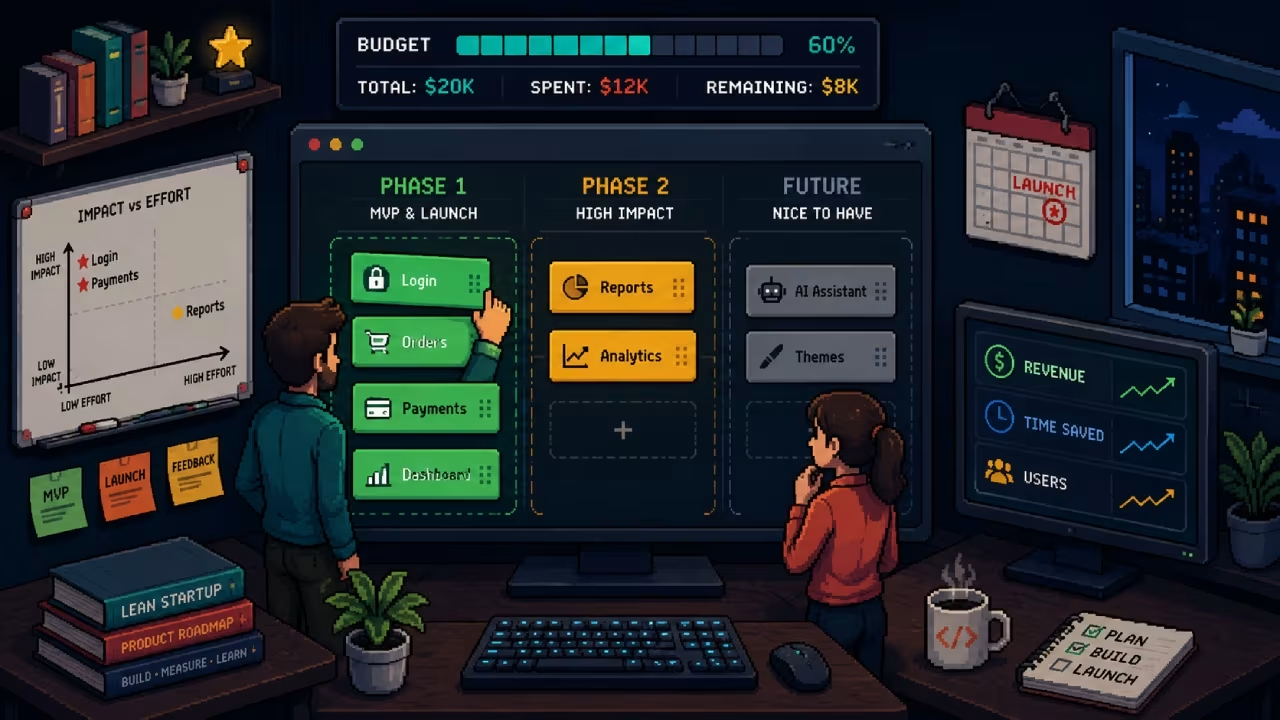
Then prioritize high-impact, low-effort features first. These give you the fastest return for the smallest investment.
Build in Phases, Not All at Once
Once you've ranked your features, split them into phases.
- Phase One: Core needs only. Enough to launch and start using the system.
- Phase Two: High-impact wants, added once Phase One proves its value.
- Phase Three: Everything else, built as budget allows.
This keeps your spending under control. It also gets you using real software sooner, instead of waiting months for a finished product.
Why This Approach Saves Money Long-Term
Launching a smaller system first does more than save budget upfront.
It also lets you:
- Test features with real users before investing more
- Catch mistakes early, when they're cheaper to fix
- Adjust priorities based on what actually gets used
- Avoid paying for features nobody wanted
Many businesses discover their "must-have" feature isn't used much at all. Better to learn that after Phase One than after the full budget is spent.
The Bottom Line
A limited budget isn't a problem. It's a forcing function.
It pushes you to build what actually matters first, instead of everything you can imagine. That usually leads to better software anyway.
Not sure which features to prioritize for your project? Let's map out a phased plan that fits your budget and your goals.
More Articles
Show All Articles →
How to Audit Your Business Data Before Building New Software
Audit your business data before building software. Learn how to find data issues, clean records, and prepare for a succ...
How to Map Your Business Processes Before Building Software
Learn how to map your business processes before building software to reduce costs, avoid rework, and create systems that...
Why Georgian E-commerce Stores Still Struggle Without Inventory Management Software
Inventory management software for Georgian e-commerce stores. Prevent overselling, sync stock, automate inventory, and g...