

Payment Systems in Georgia: BOG, Flitt, Stripe. Why Most Businesses Need More Than One
If you're building a website or a custom software system in Georgia and you need to accept payments online, you'll quickly run into the same question every Georgian developer and business owner faces: which payment gateway should I use?
The honest answer is: it depends on who your customers are. And if your customers are both local and international, the answer is probably more than one.
Here's a clear breakdown of the three most relevant options — and why each exists.
BOG iPay — The Local Standard
Bank of Georgia's payment gateway, BOG iPay, is the most widely used payment solution in the Georgian e-commerce market. It accepts Visa, Mastercard, and American Express from both Georgian and international banks, works natively with GEL, and supports installment payments — letting customers split purchases into 3, 6, or 12 months, which is a meaningful feature in the local market. It also supports recurring billing for subscription-based services.
The requirement is straightforward: a business account with Bank of Georgia. Once that's in place, integration into any website or custom system is handled through their API.
Flitt — The Modern Local Alternative
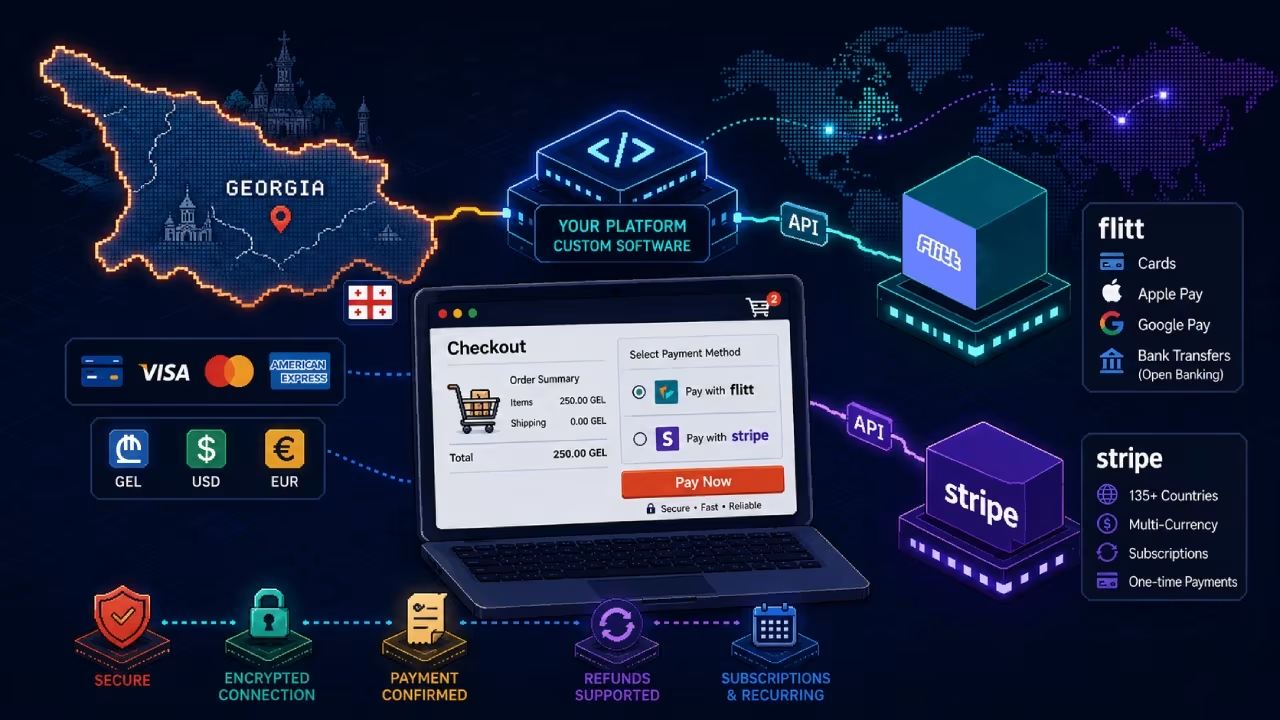
Flitt is a payment platform built by TBC Group designed to feel more like a modern fintech product than a traditional banking gateway. It accepts card payments, Apple Pay, Google Pay, and direct bank transfers through Open Banking — which carries lower fees than card processing. One Flitt integration activates all of these methods at once, without separate setups for each.
It accepts payments in GEL, USD, and EUR, and is available to businesses registered in Georgia, Uzbekistan, Armenia, and Moldova. An active TBC bank account is required.
Stripe — For International Customers
Stripe is the global standard for online payments — used by companies from small startups to large enterprises across more than 135 countries. It supports subscriptions, one-time payments, multi-currency billing, and has some of the best developer tooling available anywhere.
The important thing to understand: Stripe does not officially support Georgia as a business country. Georgian businesses cannot open a Stripe account using a Georgian company registration alone.
The common path for Georgian businesses that need Stripe is registering a company in the US or UK, obtaining the necessary tax identification, and opening a business bank account in that jurisdiction. Many Georgian tech companies, SaaS founders, and freelancers serving international clients do exactly this — because Stripe's global currency support, subscription billing capabilities, and developer ecosystem have no direct local equivalent.
If your customers are outside Georgia — in Europe, the US, or elsewhere — Stripe is often the right tool. If your customers are local, BOG or Flitt will serve them better.
Why Businesses Often Need More Than One
This is where it gets practical. A Georgian e-commerce business selling to both local and international customers needs to accept GEL payments from Georgian card holders and USD or EUR payments from international ones. No single gateway handles both audiences optimally.
A typical setup we implement for clients looks like this: BOG iPay or Flitt for local Georgian customers, and Stripe (through a US or UK entity) for international orders. Each gateway handles what it does best, and the system routes payments to the appropriate one based on the customer's location or currency.
This isn't complexity for its own sake — it's the architecture that maximizes conversion. A Georgian customer facing a foreign currency checkout, or an international customer with no familiar payment option, is a customer who doesn't complete the purchase.
What This Means When You're Building
Payment gateway integration is one of the most technically sensitive parts of any web or software project. Done correctly, it's invisible — payments work, confirmations arrive, refunds process cleanly. Done poorly, it creates failed transactions and reconciliation problems that take months to untangle.
The right setup depends on your customers, your banking relationships, and whether you're operating locally, internationally, or both. Getting that architecture right from the start is significantly easier than fixing it later.
Insights Consulting integrates BOG, Flitt, Stripe, and other payment systems into custom websites and software platforms built for Georgian businesses.
Tags
More Articles
Show All Articles →
ERP and RS.ge Integration: Connecting Your Business Systems for Faster, More Accurate Operations
ERP and RS.ge integration automates tax documents, inventory, banking, CRM, e-commerce, payroll, logistics and reporting

How GitHub Became the Center of the Software World Without Writing Most of the Code On It
Discover how GitHub became the backbone of software development through network effects, workflows, and infrastructure s...

How Small Businesses Are Using Automation to Compete With Large Corporations
Learn how small businesses use automation, CRM, ERP, and AI to compete with large corporations, improve efficiency, and...