
The Real Difference Between a Website, a Web App, and a Software Platform

In conversations about digital products, the terms website, web application, and software platform are often used interchangeably. For many people they all mean the same thing: something that runs in a browser.
However, these three types of digital systems serve very different purposes. Understanding the difference is important for businesses that want to build the right kind of technology instead of investing in the wrong solution.
Although they may look similar on the surface, the role they play in a business can be completely different.
What Is a Website?
A website is primarily designed to present information to visitors. Its purpose is to communicate who a company is, what it offers, and how people can get in touch.
Most company websites are essentially digital representations of their brand. Visitors arrive, explore the content, learn about services or products, and sometimes leave a message through a contact form.
Because of this, interaction on a website is usually limited. Users mainly read content rather than perform complex actions.
You can think of a website as a digital storefront or brochure. It helps businesses build an online presence, establish credibility, and make information easily accessible to potential customers.
What Is a Web Application?
A web application goes a step further. Instead of simply presenting information, it allows users to actively use the system to perform tasks.
A web application is essentially software that runs inside a browser. Users log in, interact with data, complete actions, and rely on the system to help them accomplish something.
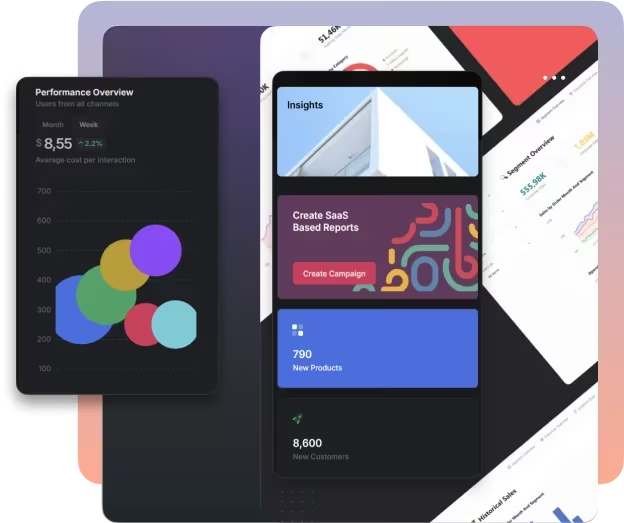
Many modern digital tools fall into this category. Project management systems, online dashboards, booking systems, and CRM tools are all examples of web applications. These systems handle data, provide personalized user experiences, and contain business logic that powers real workflows.
Unlike websites, web applications are built around functionality. The user is not just consuming information — they are using a digital tool to solve a problem or complete a process.
In simple terms, a web application is something people use, not just something they visit.
What Is a Software Platform?
A software platform is a much larger and more complex concept. While a web application usually serves a specific function, a platform creates an entire digital ecosystem where multiple groups of users interact with each other.
Platforms often connect different participants such as customers, service providers, administrators, or developers. They provide infrastructure that allows services, integrations, and additional products to exist within the same environment.
Marketplaces, SaaS ecosystems, and digital communities are good examples of platforms. These systems are not just tools; they are environments where interactions between different parties create value.
Because of their scale, platforms usually require more advanced architecture, strong integration capabilities, and the ability to grow as more users and services join the ecosystem.
A useful way to think about this is that a platform is not just software — it is a foundation on which other systems and interactions are built.
Why the Difference Matters for Businesses
Understanding these distinctions helps companies avoid a common mistake: trying to solve complex operational problems with tools that were never designed for that purpose.
Many businesses start with a simple website because their initial goal is to establish an online presence. As the company grows, they often need internal systems that manage operations, customers, or data. At that point, a web application becomes necessary.
In some cases, businesses grow even further and begin connecting different types of users, partners, or services. This is when a platform model becomes relevant.
Each stage represents a different level of technological complexity. Choosing the right approach early on can prevent inefficient workflows, technical limitations, and costly system rebuilds in the future.
Conclusion
Although websites, web applications, and software platforms may appear similar, they serve very different roles in the digital landscape.
A website focuses on presenting information.
A web application focuses on functionality and tasks.
A platform focuses on creating an ecosystem where users and services interact.
Recognizing these differences allows businesses to invest in technology that truly supports their growth instead of limiting it.
Tags
More Articles
Show All Articles →
Payment Systems in Georgia: BOG, Flitt, Stripe. Why Most Businesses Need More Than One
Compare BOG iPay, Flitt, and Stripe for Georgian businesses. Learn which payment gateway fits local and international cu...
ERP and RS.ge Integration: Connecting Your Business Systems for Faster, More Accurate Operations
ERP and RS.ge integration automates tax documents, inventory, banking, CRM, e-commerce, payroll, logistics and reporting

How GitHub Became the Center of the Software World Without Writing Most of the Code On It
Discover how GitHub became the backbone of software development through network effects, workflows, and infrastructure s...