
Digital Tools Every Manufacturing Business Eventually Needs
Manufacturing Scales Faster Than Its Processes
Manufacturing businesses often grow step by step. More orders come in, production increases, and teams expand. For a while, manual processes and spreadsheets seem to work. But at a certain point, growth exposes the cracks.
Quotes take too long. Production status is unclear. Inventory numbers don’t match reality. Managers spend their time chasing information instead of making decisions. This is the moment when digital tools stop being optional and become necessary.
Quoting and Pricing Systems
One of the first pressure points in manufacturing is quoting. When pricing is calculated manually, it becomes slow and error-prone. Different people use different versions of spreadsheets, assumptions change, and mistakes slip through.
Digital quoting tools centralize pricing logic. They make calculations faster, more consistent, and easier to control. This doesn’t just save time — it helps win more deals by responding quickly and professionally.
Order and Job Tracking
As order volume increases, keeping track of what’s happening on the shop floor becomes harder. Without a clear system, teams rely on verbal updates, emails, or handwritten notes.
Digital job tracking tools show where each order stands, what’s delayed, and what’s ready to move forward. Managers get real-time visibility, which allows them to spot bottlenecks early and prevent missed deadlines.
Production Planning and Scheduling
Production planning becomes increasingly complex as more jobs run in parallel. Small changes can affect multiple orders, and without a system, planning turns into constant firefighting.
Digital planning tools help manufacturers organize workloads, balance capacity, and adjust schedules without chaos. This leads to smoother operations and more predictable delivery times.
Inventory and Material Management
Inventory problems are expensive. Too much stock ties up cash. Too little stock stops production.
Digital inventory tools provide accurate, up-to-date visibility into materials, components, and finished goods. They reduce guesswork and help manufacturers plan purchases based on real demand rather than assumptions.
Quality Control and Documentation
As production scales, maintaining consistent quality becomes harder. Relying on memory or informal checks increases the risk of defects.
Digital quality control tools help standardize inspections, record issues, and store documentation in one place. This improves traceability and makes it easier to identify recurring problems before they grow.
Reporting and Management Visibility
Many manufacturing decisions are still made based on intuition. While experience is valuable, it’s not enough when operations become complex.
Digital reporting tools turn production data into clear insights. Managers can see performance trends, identify inefficiencies, and make decisions based on facts instead of guesswork.
Integrating Systems Instead of Adding Chaos
One common mistake is adding too many disconnected tools. When systems don’t talk to each other, complexity increases instead of decreasing.
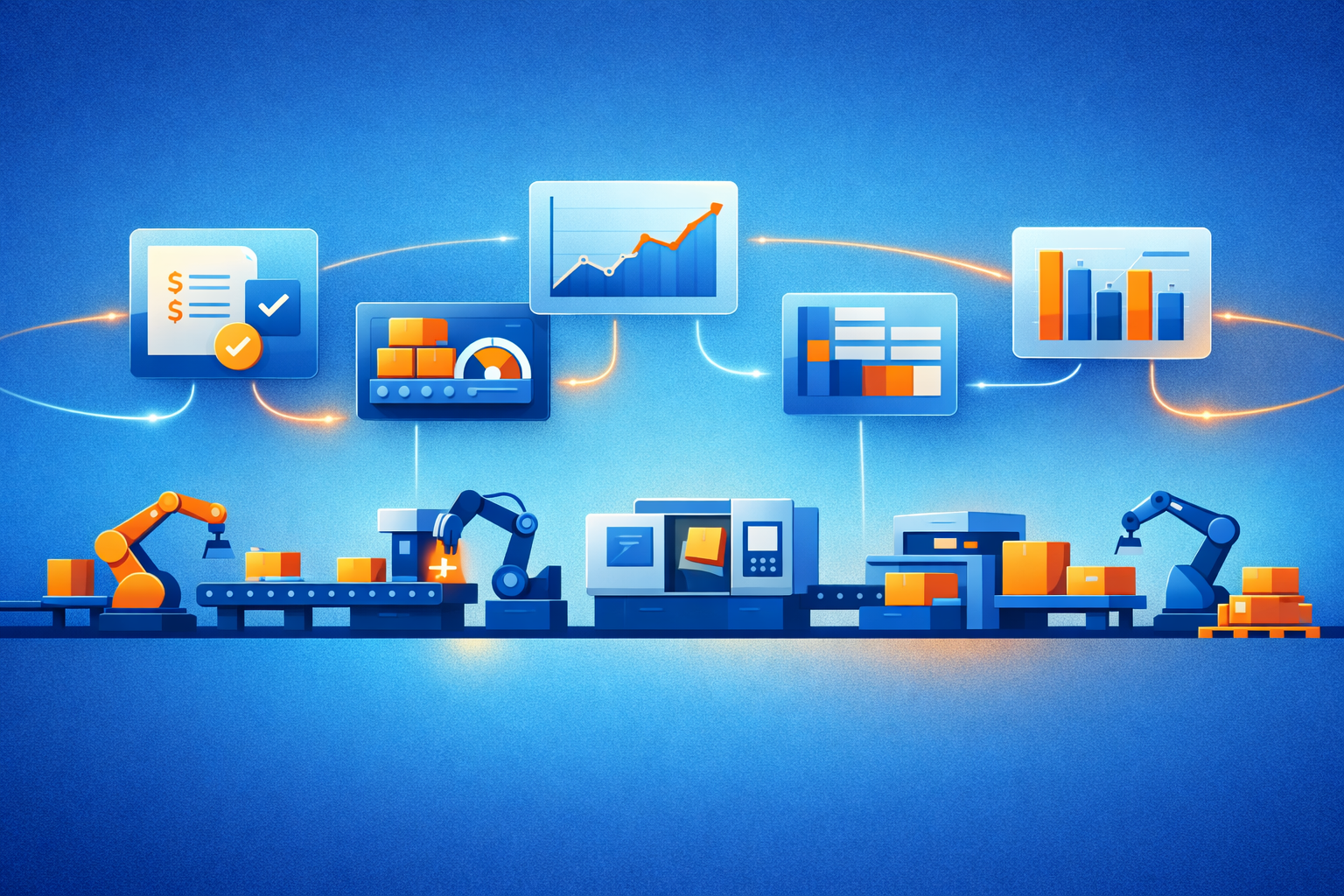
The most effective digital setups connect quoting, production, inventory, and reporting into a unified workflow. This reduces duplicate work and ensures everyone is working with the same information.
Final Thoughts
Every manufacturing business reaches a point where manual processes slow growth instead of supporting it. Digital tools don’t replace people — they support them.
When implemented correctly, these tools bring clarity, reduce errors, and make scaling predictable. Manufacturing becomes less about constant problem-solving and more about controlled, sustainable growth.
Tags
More Articles
Show All Articles →
How We Built a CRM for a UK Construction Company (Case Study)
Custom CRM for a UK construction company: streamline leads, quotes, orders, and finances with a system built for real wo...

Common Mistakes Georgian Companies Make When Hiring Developers
Common mistakes Georgian companies make when hiring developers and how to avoid costly software failures.
What Does a Well-Structured Digital Infrastructure Look Like in a Business?
Learn what a well-structured digital infrastructure looks like and how connected systems, automation, and data flow impr...