
The Moment Automation Stops Being Optional
Most businesses don’t decide to automate because they want to.
They do it because, at some point, they have no other choice.
In the early stages, manual work feels manageable. People remember things. Teams communicate informally. Problems are solved with effort and attention. For a while, this works surprisingly well.
Until it doesn’t.
There is a specific moment when automation stops being a convenience and becomes a necessity. That moment isn’t defined by size or revenue, but by the limits of human effort.
When manual work reaches its natural ceiling
Manual processes rarely fail all at once. They slowly lose reliability.
Tasks begin taking longer. Small mistakes appear more often. Follow-ups get missed. Reporting becomes harder to trust. Decisions take more time because information is scattered across tools, conversations, and people’s memories.
At first, teams compensate. Someone double-checks work. Someone stays late. Someone becomes “the person who knows how this really works.” The business keeps moving, but it becomes fragile.
This isn’t a people problem. It’s a capacity problem.
Growth changes what effort can support
Early growth is often powered by discipline and commitment. But growth also multiplies complexity.
As clients, projects, and team members increase, so do handoffs, exceptions, and edge cases. What once worked smoothly starts requiring constant attention. Processes that were clear in small teams become unclear when more people are involved.
At this point, effort stops scaling. No amount of personal responsibility can replace structure. Systems have to take over.
Decision overload is the clearest warning sign
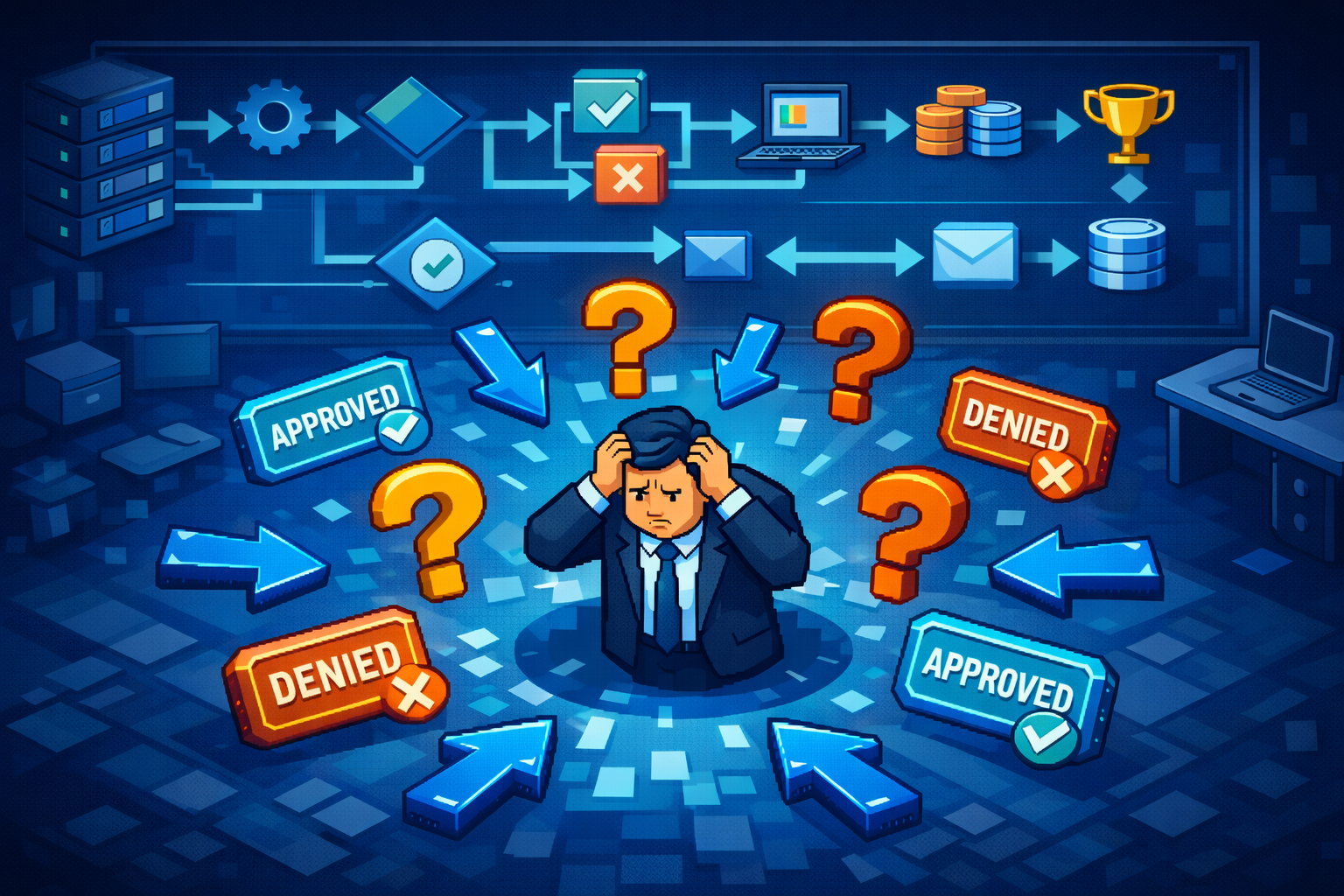
One of the strongest signals that automation is overdue is decision fatigue.
When nearly every task requires confirmation, approval, or discussion, work slows down—not because people are unwilling, but because decisions lack structure. Managers become bottlenecks. Teams wait instead of acting. Momentum disappears.
Automation doesn’t eliminate decisions. It defines them. It establishes what happens automatically, what needs approval, and what should trigger attention. Once decisions are embedded into workflows, progress resumes without constant oversight.
Loss of visibility means loss of control
Another turning point comes when leaders can no longer see what is happening clearly.
Reports arrive too late to be useful. Numbers from different teams don’t match. Performance is explained through opinions instead of data. Issues are discovered only after they’ve caused damage.
At this stage, automation is no longer about efficiency. It’s about restoring clarity. Automated systems provide real-time visibility, consistent data, and early signals that allow action before problems escalate.
Without visibility, leadership becomes reactive by default.
When people start replacing processes
In many growing businesses, people become the system.
Knowledge lives in individuals rather than workflows. Critical steps are remembered instead of enforced. Gaps are fixed manually again and again. This creates hidden risk.
It works until someone is unavailable, leaves the company, or simply makes a mistake. Then the entire process breaks.
Automation transforms individual knowledge into shared structure, reducing dependency on specific people and increasing resilience.
Reliability becomes the real requirement
Eventually, the consequences reach customers and teams alike.
Customers experience delays, inconsistencies, and repeated explanations. Teams experience confusion, duplicated work, and frustration. Trust—both internal and external—starts to erode.
At this point, automation is no longer about doing more with less. It’s about becoming reliable again. Systems create predictability, and predictability restores trust.
From effort to design
The real shift happens when a business changes how it thinks about work.
Instead of expecting people to remember, check, and fix things manually, the focus moves to designing processes that guide behavior and prevent errors by default. The system becomes responsible for consistency, while people focus on judgment and improvement.
This is not a technical change. It’s an operational one.
Conclusion
Automation doesn’t replace people. It replaces chaos, guesswork, and constant firefighting.
The moment automation stops being optional is the moment effort alone can no longer carry the business forward.
When that moment arrives, the choice is simple: continue compensating manually, or build systems that allow the business to grow with clarity and control.
The businesses that recognize this early don’t just scale faster — they scale with less friction.
Tags
More Articles
Show All Articles →
How to Measure Success in Digital Transformation
How to measure digital transformation success using real business metrics like efficiency, data quality, decision-making...

Turning Business Data Into a Competitive Advantage
Learn how businesses can turn data into a competitive advantage through better decisions, automation, analytics, and str...

How Automation Changes Decision-Making, Not Just Speed
Learn how automation improves decision-making, visibility, and control. helping businesses operate smarter and scale eff...