

How to Build a Unified Data Warehouse for Small and Medium-Sized Businesses
As small and medium-sized businesses grow, one problem appears almost inevitably:
data chaos.
Sales data lives in a CRM.
Marketing data lives in ad platforms.
Financial data lives in accounting tools.
Reports live in Excel files.
And suddenly, no one knows which numbers are correct.
This is exactly where a unified Data Warehouse becomes a game changer — not as an enterprise luxury, but as a strategic foundation for scalable growth.
The Hidden Cost of Fragmented Data
Most SMBs don’t realize how much fragmented data is costing them:
-
Management meetings focused on arguing over numbers
-
Reports prepared manually every week
-
Decisions based on outdated or incomplete information
-
No clear understanding of ROI
-
Growth driven by intuition instead of evidence
When data is scattered, clarity disappears — and without clarity, growth slows.
What a Data Warehouse Really Is (and What It Is Not)
A Data Warehouse is often misunderstood.
It is not:
-
Another CRM
-
Another operational database
-
A collection of Excel files
A Data Warehouse exists for one purpose:
👉 to support analysis, reporting, forecasting, and decision-making.
Operational systems record transactions.
A Data Warehouse explains what those transactions mean for the business.
Why Data Warehouses Are No Longer “Enterprise-Only”
In the past, Data Warehouses were expensive, complex, and slow to implement.
That is no longer the case.
Today, SMBs benefit from:
-
Cloud infrastructure
-
Scalable pricing
-
Automated data pipelines
-
Modern BI tools
This makes it possible to build a lean, cost-effective Data Warehouse that grows alongside the business.
The Core Value: One Source of Truth
A unified Data Warehouse creates a single source of truth across the organization.
This means:
-
Sales, marketing, finance, and operations see the same numbers
-
KPIs are calculated consistently
-
Decisions are based on facts, not assumptions
Once data is centralized, confidence in decision-making increases immediately.
What Data Should SMBs Start With?
One of the biggest mistakes SMBs make is trying to warehouse everything at once.
The correct approach is prioritization.
Start with data that directly impacts revenue and growth:
High-Priority Data Sources
-
CRM: leads, deals, pipeline stages
-
Sales: transactions, revenue, conversion rates
-
Marketing: ad spend, channels, campaign performance
-
Finance: invoices, costs, profit margins
-
Website: traffic, conversions, user behavior
This data alone answers 80% of critical business questions.
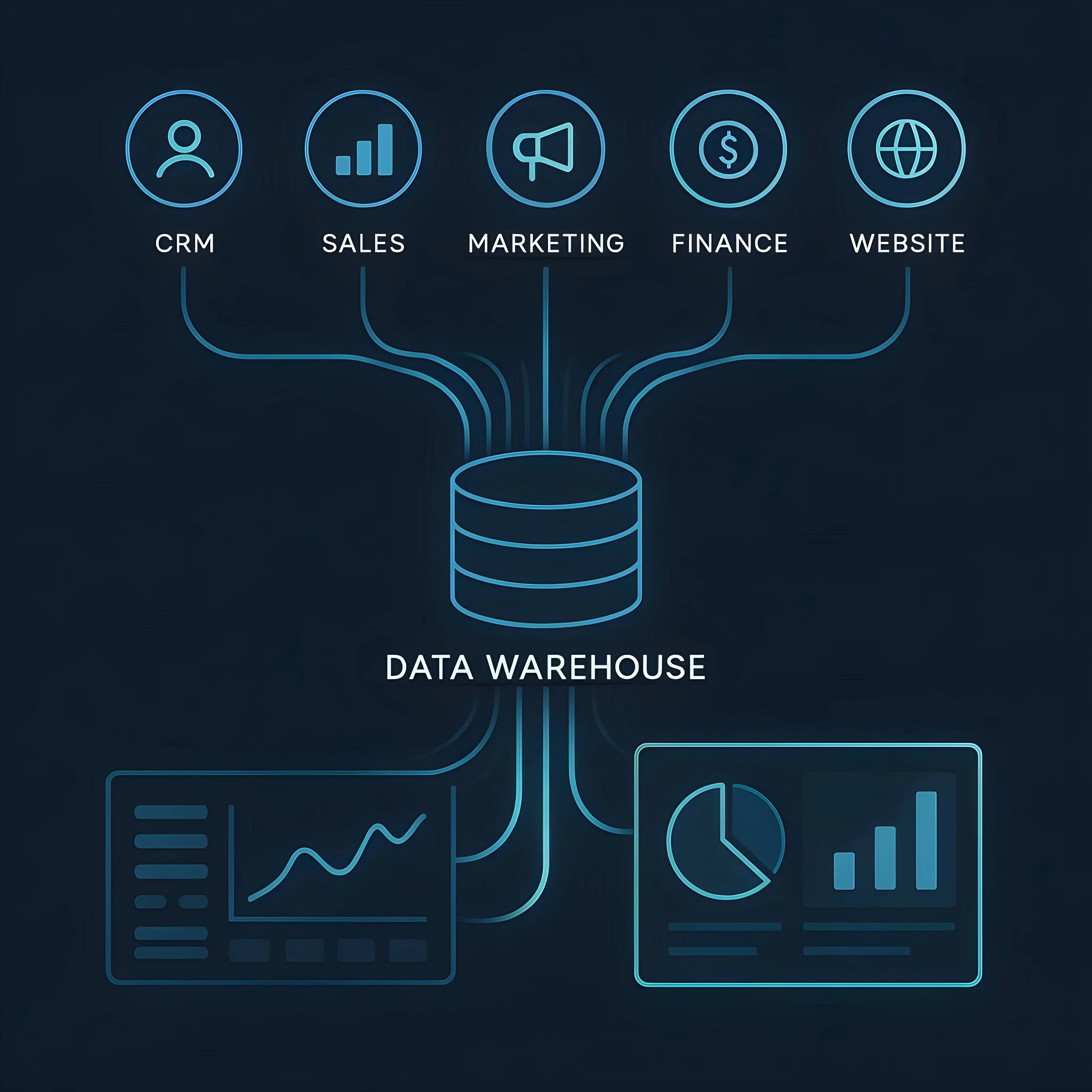
A Simple, Scalable Data Warehouse Architecture
SMBs do not need complex enterprise architectures.
A practical structure includes:
1. Data Sources
CRM, ERP, accounting tools, marketing platforms, websites
2. ETL / ELT Pipelines
Automated processes that:
-
extract data
-
clean and standardize it
-
load it into the warehouse
3. Central Data Warehouse
Optimized for analytics, not transactions
4. Analytics & Dashboards
BI tools that turn data into insights, KPIs, and forecasts
This architecture is simple, scalable, and future-proof.
Step-by-Step: How SMBs Should Build a Data Warehouse
Step 1: Define the Right Questions
Before any technology:
-
What decisions should data improve?
-
What problems are you trying to solve?
Step 2: Audit Your Data
Identify:
-
where data lives
-
what quality it has
-
what’s missing
Step 3: Define KPIs
Focus on metrics that actually matter:
-
revenue
-
conversion
-
acquisition cost
-
profitability
Step 4: Design Clean Data Models
Structure data for clarity and consistency.
Step 5: Automate Everything
Manual exports and Excel files must disappear.
Step 6: Build Actionable Dashboards
Dashboards should:
-
answer questions
-
highlight problems
-
support decisions
Step 7: Use Data Daily
A Data Warehouse only creates value if it’s used consistently.
Common Mistakes That Kill Data Warehouse Projects
SMBs often fail not because of technology, but because of strategy.
Avoid these mistakes:
-
Trying to build everything at once
-
Ignoring data quality
-
No ownership of data
-
Building dashboards without clear KPIs
-
Treating the Data Warehouse as “just reporting”
A Data Warehouse is a business system, not an IT experiment.
Why Data Warehouse + CRM/ERP Is So Powerful
CRM and ERP systems show what is happening now.
A Data Warehouse shows why it is happening and what comes next.
When integrated:
-
Sales activity connects to revenue outcomes
-
Marketing spend connects to profitability
-
Operations connect to performance trends
This is where data becomes strategy.
Real Impact for Small and Medium Businesses
Businesses with a unified Data Warehouse achieve:
-
Faster and more confident decisions
-
Clear visibility across departments
-
Reduced reporting effort
-
Better forecasting
-
Lower operational risk
-
Sustainable, data-driven growth
This is not about reports — it’s about control and predictability.
Conclusion: Start Small, Think Long-Term
A unified Data Warehouse is no longer optional for growing businesses.
It is the foundation for:
-
smarter decisions
-
scalable operations
-
competitive advantage
SMBs don’t need enterprise complexity.
They need clarity, automation, and the right data at the right time.
The companies that organize their data today will outperform their competitors tomorrow.
Tags
More Articles
Show All Articles →
How to Measure Success in Digital Transformation
How to measure digital transformation success using real business metrics like efficiency, data quality, decision-making...

Turning Business Data Into a Competitive Advantage
Learn how businesses can turn data into a competitive advantage through better decisions, automation, analytics, and str...

The Moment Automation Stops Being Optional
When automation stops being optional: learn the signs that manual processes hit their limit and why systems are essentia...