


LMS vs Academy Management System: What’s the Difference and Which One Does Your Organization Need?
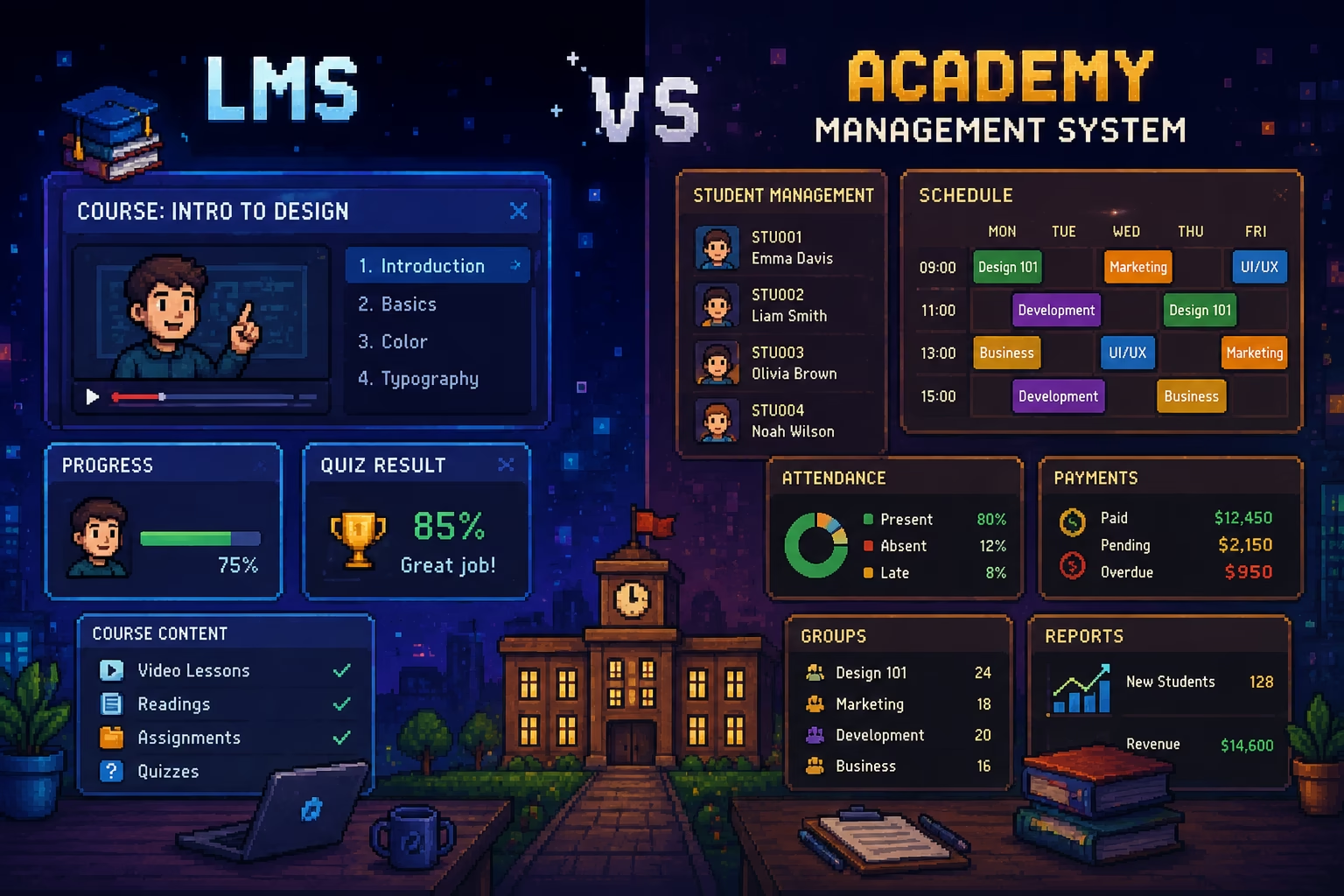
As digital education continues to evolve, educational organizations increasingly face a common question:
Is an LMS enough, or do you also need an Academy Management System?
These two terms are often used interchangeably, leading to confusion. Some organizations view an LMS as a complete academy management solution, while others assume an Academy Management System is simply another learning platform.
In reality, these systems serve different purposes and address different challenges within an educational organization.
In this article, we’ll explore what each system does, their key functions, and which type of organization may benefit most from each approach.
What Is an LMS (Learning Management System)?
A Learning Management System (LMS) is a platform designed to manage the learning process itself. Its primary purpose is to deliver educational content, organize courses, and track learner progress.
An LMS focuses on answering one key question:
"How is learning taking place?"
These platforms are commonly used for online courses, training programs, certification programs, and corporate learning initiatives.
Key LMS Features
- Course creation and management
- Video lessons and learning materials
- Online assessments and quizzes
- Assignment management
- Student progress tracking
- Grade management
- Certification issuance
- Learning analytics and reporting
What Is an Academy Management System?
An Academy Management System focuses on managing the operational and administrative aspects of an educational organization.
If an LMS answers:
"How are students learning?"
An Academy Management System answers:
"How is the academy being managed?"
These systems are commonly used by training centers, educational institutions, art schools, dance academies, sports academies, professional training organizations, and other educational providers.
Key Features of an Academy Management System
Student Management
- Student registration
- Student profiles and records
- Enrollment management
- Student history tracking
Program and Group Management
- Program creation and administration
- Class and group organization
- Student transfers between groups
- Capacity management
Scheduling Management
- Class schedules
- Classroom allocation
- Instructor scheduling
- Calendar management
Financial Management
- Tuition tracking
- Payment monitoring
- Invoice generation
- Financial reporting
Attendance Management
- Attendance tracking
- Absence monitoring
- Attendance statistics
Administrative Reporting
- Student analytics
- Financial insights
- Group performance analysis
- Resource utilization reporting
The Main Difference
Although both systems support educational organizations, their primary focus areas differ.
| LMS | Academy Management System |
|---|---|
| Learning delivery and tracking | Administrative and operational management |
| Courses and educational content | Students, groups, and operations |
| Online learning processes | Daily academy operations |
| Assessments and certifications | Financial and organizational management |
| Learning progress monitoring | Resource and process management |
When Is an LMS the Right Choice?
An LMS is often the most suitable option when the primary goal is delivering educational content and managing the learning experience.
Examples include:
- Online course platforms
- Corporate training programs
- Certification providers
- Distance learning institutions
- Employee training initiatives
In these cases, the main focus is on content delivery, learning outcomes, and student engagement.
When Is an Academy Management System the Right Choice?
An Academy Management System becomes increasingly valuable when an organization manages complex operational processes.
Examples include:
- Multi-branch academies
- Art and music schools
- Dance studios
- Sports academies
- Training centers
- Professional education institutions
- Organizations with hundreds or thousands of students
For these organizations, managing students, schedules, payments, attendance, and administrative workflows is often a critical priority.
Can Both Systems Be Used Together?
Absolutely.
Many educational organizations use both systems simultaneously.
One system may handle:
- Course delivery
- Learning content
- Assessments
- Certifications
While the other manages:
- Student records
- Scheduling
- Attendance
- Payments
- Administrative processes
As educational organizations grow, it becomes increasingly common to integrate multiple systems that work together to support both learning and operational efficiency.
Questions to Ask Before Making a Decision
Before selecting a solution, consider the following questions:
How is learning delivered?
If your primary challenge is organizing educational content and tracking learning progress, an LMS may be the area to focus on.
How complex are your administrative operations?
If your organization manages multiple groups, schedules, payments, and student records daily, operational management may require greater attention.
How many students do you manage?
As student numbers increase, centralized management becomes increasingly important.
How many staff members are involved?
Administrators, instructors, finance teams, and managers often require different tools to effectively perform their roles.
Conclusion
LMS platforms and Academy Management Systems are not the same, although both play an important role in modern education.
An LMS focuses on the learning process itself, while an Academy Management System focuses on managing the broader operations of an educational organization.
The most appropriate solution depends on your organization's structure, educational model, administrative complexity, and long-term goals.
Ultimately, the right choice begins with a simple question:
Which process are you looking to improve first: learning delivery or academy operations?
Tags
More Articles
Show All Articles →
INAC: One Platform for Academy Management
INAC by Insights helps academies manage students, payments, schedules, attendance, and communication from a single platf...

Top 5 Emerging Technologies That Will Reshape Business in 2026
Top emerging technologies shaping business in 2026, from AI agents to cybersecurity, helping companies scale, automate,...

New Year, New First Impression: Why Trust Starts with Your Website
The New Year is the perfect time to update your website. Learn why trust starts with first impressions and a modern, pro...